

Kitchen Remodeling ROI: What Boosts Value and How to Maximize Returns

A kitchen remodel can raise resale value, but the biggest budget does not always bring the best return. The strongest projects solve real problems, match the home, and fit the local market.
Kitchen remodeling ROI is usually highest when the work feels fresh, practical, and not overbuilt.

What the latest ROI numbers show
The best-known national benchmark is the annual Cost vs. Value Report from Zonda. The 2024 report showed a clear pattern. Smaller, focused kitchen projects often returned more value than large luxury remodels.
Project type | Average cost | Average resale value added | Cost recouped |
Minor kitchen remodel, midrange | $27,492 | $26,406 | 96.1% |
Major kitchen remodel, midrange | $79,982 | $39,587 | 49.5% |
Major kitchen remodel, upscale | $158,530 | $60,176 | 38.0% |
These are national averages. They are not a promise. Local home prices, buyer demand, and project choices can change the result.
The main lesson is simple. A practical update can beat a full gut renovation if the current layout already works.
The 2024 national data showed that a minor midrange kitchen remodel recouped about 96% of its cost at resale.
This does not mean every homeowner should spend $27,000. It means careful scope control matters.
The factors that change kitchen remodel return
Design choices affect perceived value
Buyers notice layout first. They want a kitchen that feels easy to use.
High-value design improvements often include:
Opening tight sight lines where it makes sense
Adding usable counter space
Improving lighting
Creating better storage
Replacing worn cabinet fronts
Updating old flooring
Improving traffic flow around the island
A modern layout does not need to mean tearing down every wall. In many homes, keeping plumbing and gas lines in place saves thousands. That money can go toward visible upgrades.
Poor design choices hurt ROI. Oversized islands, trendy colors, awkward appliance locations, and too many custom features can narrow the buyer pool.
Materials should match the home
Materials need to fit the price point of the property.
A $350,000 home rarely needs imported stone, custom cabinetry, and a professional-grade range. A $1.5 million home may need higher-end finishes to meet buyer expectations.
Good ROI materials often include:
Quartz or durable solid-surface counters
Midrange cabinet boxes with upgraded fronts
Luxury vinyl plank, tile, or hardwood where appropriate
Stainless steel or panel-ready appliances
Classic hardware and fixtures
Easy-clean backsplashes
The safest choices are durable and neutral. That does not mean boring. A warm white backsplash, wood accents, black hardware, or soft green cabinets can feel current without taking over the room.

Local market trends matter
A remodel in one market may not perform the same in another.
In high-demand neighborhoods, a clean and move-in-ready kitchen can help a home sell faster and attract stronger offers. In slower markets, buyers may focus more on price and less on upgrades.
Local trends to check before starting include:
Recent sale prices for remodeled homes
How long updated homes stay on the market
Common finish levels in nearby listings
Buyer expectations for appliances and layouts
Whether open kitchens are common in the area
Local labor and permit costs
A real estate agent or appraiser can help compare homes with older kitchens against similar homes with updated ones. That spread gives a rough ceiling for what a remodel may add.
Two real-world style case studies
These examples are anonymized composites based on common remodeling scopes and national cost patterns. Actual results vary.
Case study one shows the power of a minor remodel
A 1980s suburban home had solid cabinet boxes, a usable layout, and outdated finishes. The owners planned to sell within two years.
They avoided a full gut job. The project included:
New cabinet doors and drawer fronts
Quartz countertops
New sink and faucet
Updated backsplash
Recessed and under-cabinet lighting
Midrange stainless steel appliances
Fresh paint
The total cost stayed near the national minor remodel range. The home listed with updated photos, showed well, and competed strongly against similar homes nearby.
The likely return was high because the project removed obvious objections. Buyers did not see a dated kitchen that required immediate work.
Case study two shows why luxury can reduce ROI
A larger home in an average-priced neighborhood received a full upscale kitchen remodel. The owners chose custom cabinets, premium stone, luxury appliances, a relocated sink, new electrical work, and structural changes.
The finished kitchen looked impressive. The problem was the neighborhood price ceiling. Nearby buyers liked the work, but they would not pay enough extra to cover the full cost.
The remodel added value, but the cost recouped was lower. This matches national data, where major upscale kitchen remodels often return a smaller percentage than modest updates.
The lesson is not to avoid premium finishes. The lesson is to use them where the market supports them.
Tips to maximize remodeling ROI
Keep the layout if it works
Moving plumbing, gas lines, and structural walls can add major cost. If the current layout functions well, improve what buyers see and use every day.
Spend on lighting, counters, cabinets, appliances, and storage before moving the sink across the room.
Choose energy-efficient appliances
Energy-efficient appliances can help with resale and monthly costs. Look for ENERGY STAR certified refrigerators, dishwashers, and ventilation products where available.
The savings may not pay for the remodel alone. Still, buyers like newer appliances that look clean and cost less to run.
Improve lighting in layers
A good kitchen needs more than one ceiling fixture.
Use a mix of:
Recessed lighting for general light
Pendants over an island
Under-cabinet lights for prep work
Natural light where possible
Lighting changes the way finishes look. It also makes a modest remodel feel more expensive.
Do not chase every trend
Trendy design can age fast. Pick one or two current elements and keep the rest simple.
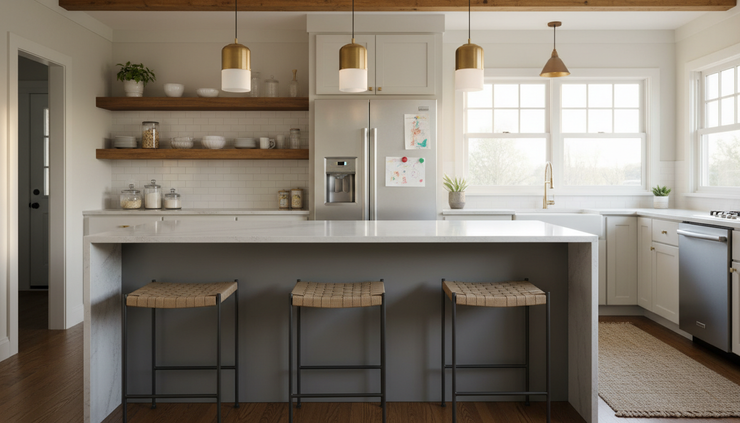
Good places for personality include wall color, hardware, stools, rugs, and lighting. These are easier to change later.
Fix function before finishes
A beautiful kitchen with poor storage still frustrates people.
High-ROI function upgrades include deep drawers, pull-out trash storage, pantry cabinets, lazy Susans, drawer organizers, and better outlets. These upgrades make the kitchen easier to live with.
Set a budget based on home value
Many homeowners use a rough range of 5% to 15% of home value for a kitchen remodel. The right number depends on the home, market, and plans to sell.
If resale is the goal, stay closer to the lower or middle part of that range. If long-term enjoyment matters more, a higher spend may make sense.

The smartest remodel balances resale and daily life
The best kitchen remodels do three things well. They improve function. They look current. They fit the local market.
A minor remodel can bring a strong return when the layout already works. A major remodel can still make sense when the kitchen has serious problems or the home’s price point supports the cost.
Treat ROI as a guide, not the only goal. A kitchen is used every day. The right project should make the home easier to live in now and easier to sell later.


Comments